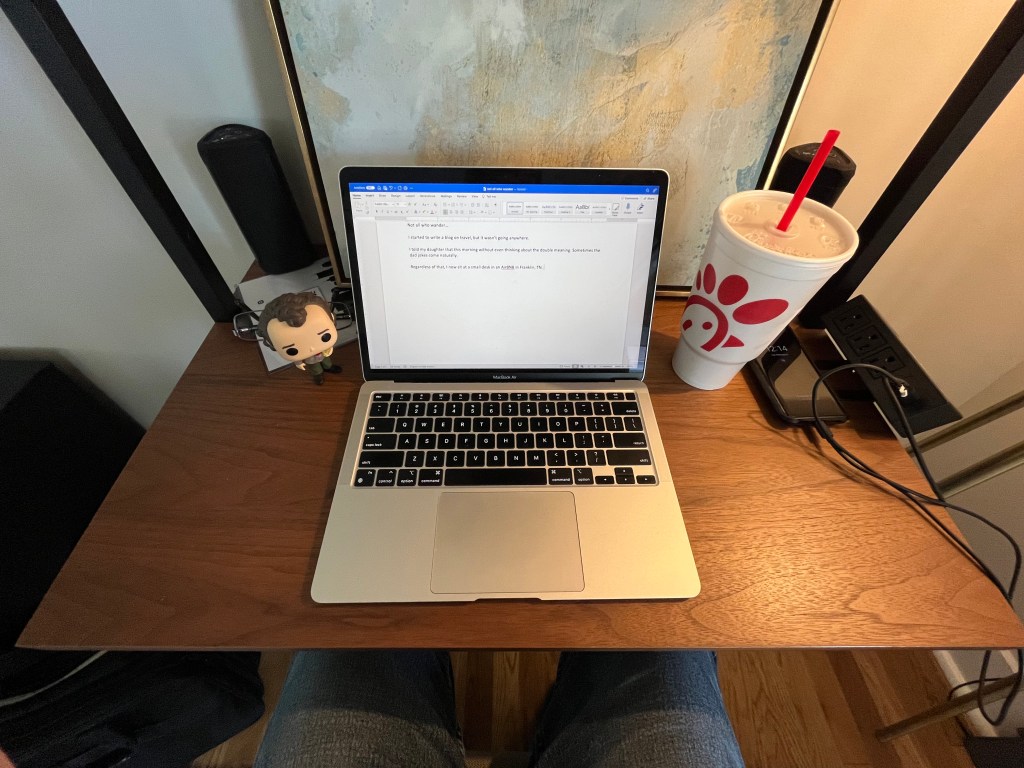
Here’s a little peek into my writing process along with a sneak peak at the first draft of the 2025 Christmas Story – Silent Flight, Silent Byte (working title, I’m open to ideas)
As I go through the process, I will post updated versions of the story so you can see how things change as the process progresses.
Different authors have different processes. Some use a more fluid, fly by the seat of your pants method. Some are very rigid, with every step planned from outline to finished product.
My writing style is more fluid which is quite fun in the writing process until it comes time to edit. You’ll see.
Here are the steps I use:

BRAINSTORMING:
This mostly happens in my head, though I sometimes involve family members and friends in the process.
Keep in mind that my brain already carries dozens of story ideas bouncing around up there like pinballs. When it is time to start writing a new project, those pinballs fight their way to my fingertips in a war to see which one comes out. Often, it’s the tiniest undeveloped little story that slips through.
That’s what happened with this year’s Christmas story. I wanted something that could happen at Christmas (a traveller trying to get home for Christmas) that had tension (all flights cancelled) created by an interesting unique situation (worldwide internet outage).
I knew there were several novels about worldwide power outages with various causes. My brain went to the question, what would happen if just the internet went down – everywhere. We could barely function.
So that’s the idea that began flowing into my keyboard. I borrowed a character from my original 2025 Christmas story that I plan to refine into the 2026 Christmas story. I placed him at the airport in Newark, New Jersey, and I turned off the internet.
With story ready to burst from my brain, I was ready to write.
But first

OUTLINING:
I have a confession to make. I didn’t outline this year’s Christmas story. It was two days till Christmas when I started it. Read my blog if you want that back story.
Outlining gives you the bones to hang the flesh of your story on (okay, gross analogy but it works). If you choose to read the first draft in the next section, you will find that it needs serious structural editing. Much of that could be avoided by sticking to an outline.
There are many how-to guides for outlining available both online and in books about writing. Check them out for more information.
My natural tendency is to write by the seat of my pants. I get into my protagonist’s head and let them tell the story.
I will try to follow the outline but sometimes my characters take over and take the story in a different direction. Then I will go back and update the outline.
To help me keep my facts straight and make more believable characters, I will often put my main characters through an interview to lay out their personality, background, likes and dislikes, and quirks. I’ve done this with every novel I’ve written and at least one of the Christmas stories.
I then put that interview as well as a spreadsheet of facts about each character on a second screen as I write.
Again, this year’s story, Silent Flight, was rushed and I skipped that step.
If you read the first draft (click where you see the words “first draft” throughout this page) you may notice inconsistencies that I could have avoided. With this story I will correct that in the next step.
CONTENT and STRUCTURAL EDIT:
For this story I have done a quick first edit. This involved reading through it for inconsistencies, and flow. I added chapter headings and made minor corrections as well as added an epilogue. I also made notes to myself and highlighted them. This is my first second draft. If you read this, please pay attention to the notes at the top.
Next, I will write each chapter’s topic on a Post-It note and lay them out on a table. (Yes, I’m a visual learner). I can then rearrange them easily so the story makes the most sense and flows well.
The grammar cop in me will also correct grammar mistakes, though that’s not the point.
That leads to the next step.
SECOND DRAFT and PEER REVIEW.
I don’t usually let anyone else see the story until this step. Then I have trusted family and friends that I give the manuscript to for their suggestions. This is also the time to bring in sensitivity readers to make sure your book does not contain offenses that you may have missed.
It is important to consider all suggestions honestly. In the end, it is the author’s choice of which to incorporate.
Unfortunately, I did not save the peer review copy so I cannot post it here. The major changes you see in the final copy below were in that draft. The final draft had only several lines added or removed for clarification and pace.
For my Christmas stories, this is as far as I go for editing.
This year’s final story can be found here.
W.W.M.H.D., An Almost Heroic Christmas Tale.
Yes, I changed the title as the story is neither silent nor did the protagonist end up on a flight.
I settled on this title as it gets people curious about the acronym (which shows up several times in the story) and about why it is almost heroic.
There were many titles I entertained.
I am still open to suggestions for improvement and corrections as, while the story has gone through 3 edits and some peer review, all that has been very limited compared to what a novel goes through.
For novels there are at least 3 more steps (publishers may require more).
PROFESSIONAL EDIT
Professional editors know what they are doing. Even if you are and excellent editor, it is important to have someone professional review your manuscript and give suggestions for improvement.
In some cases, publishers will provide these editors, but most publishers require at least one edit by a reputable professional before they will even consider a manuscript. This is especially true for new authors.
Even if you are self-publishing, you will want to put out your best work from the first book. If you put out a mediocre book, readers will not come back.
Professional editing is not cheap but it is worth every penny.
When you get the report back from your editor, pay attention to it. You paid too much money to ignore it. Make the changes as best you can and send it back for review.
If you are self publishing, you now have two more steps.
FORMATTING
KDP (Kindle Direct Publishing) and others will require a specific page layout, fonts, size, etc. Follow their instructions precisely or hire someone to do it.
PROOFREADING
Don’t rely on yourself for this. You can proofread it yourself but then bring in others, preferably professionals to do this as well.
Now you’re ready to publish – sort of. All you need is cover art (pay a pro), a marketing plan, a publisher, a platform…
Welcome to the wonderful world of writing. Trust me, it’s worth it.
 Solano Writing