I was good at cross country running when I was young.
In High School, I rode my bike so much that I had a hard time finding pants that fit. Pants that were skinny enough for my waste were too skinny for my thigh muscles.
It’s how I recharge after a day of dealing with people.
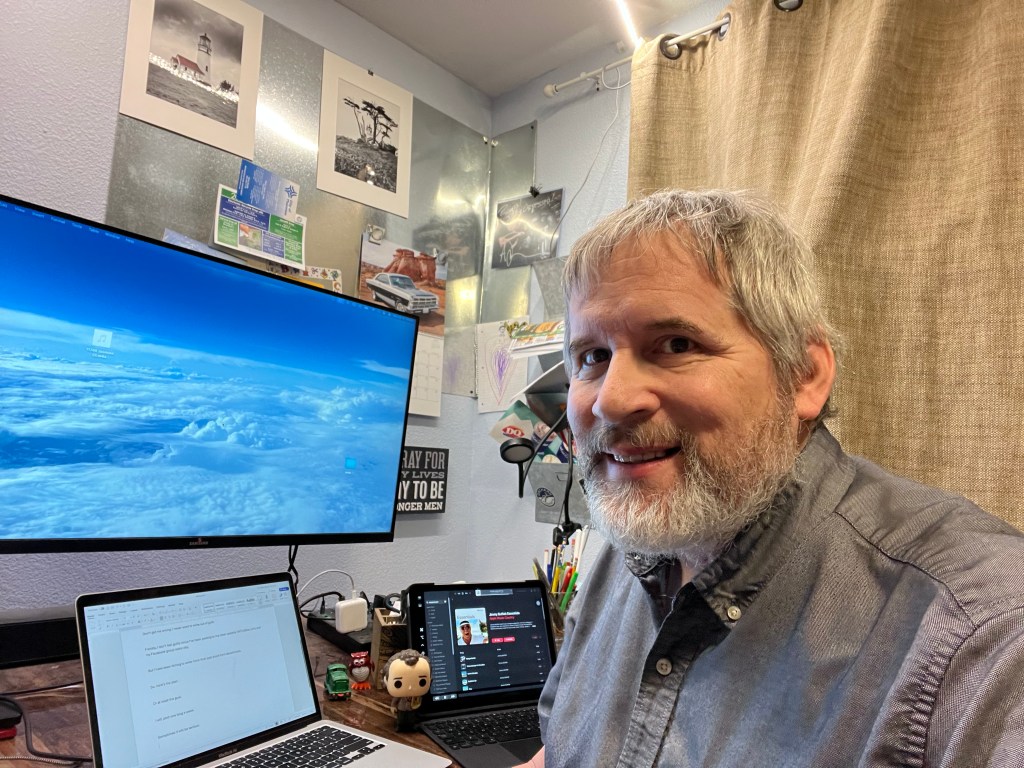
Nowadays, I find my alone time in my “cave” (a spare room with no windows in the basement).
The bike tires are flat, so my gut isn’t. Pants that fit my waste have plenty of thigh room now.
So, what’s with the title? Am I writing about superheroes?
Maybe someday.
Proverbs 27 has a verse that says,
“Iron sharpens iron, and one man sharpens another.”
(ESV)
As much as I love my alone time, I can’t do life alone.
I would flounder, lose my motivation. Life would stink.
Since I was a teenager, I started intentionally reaching beyond myself. I purposely sought to get to know other people.
The friends I’ve made over the years have challenged me in so many ways. They’ve encouraged, challenged and corrected me enough to keep my on the right path for my life.
When I’ve strayed from that path, they’ve guided me back to it.
Hopefully, I’ve guided a few of them in return.
All this comes to mind now as our church is getting ready to kick off small groups for the fall season. I’ll be leading a men’s breakfast every Saturday morning in Brighton, Colorado. We have dozens of others groups in the area. Email me if you want any information about them.
If you aren’t in this area, I strongly recommend getting involved in some sort of small group.
If your church does not have them or you don’t go to church, start one of your own.
People grow better together.
“As iron sharpens iron, so one person sharpens another.” (Proverbs 27:17 NIV).
Our garden has been a major time sponge as of late.
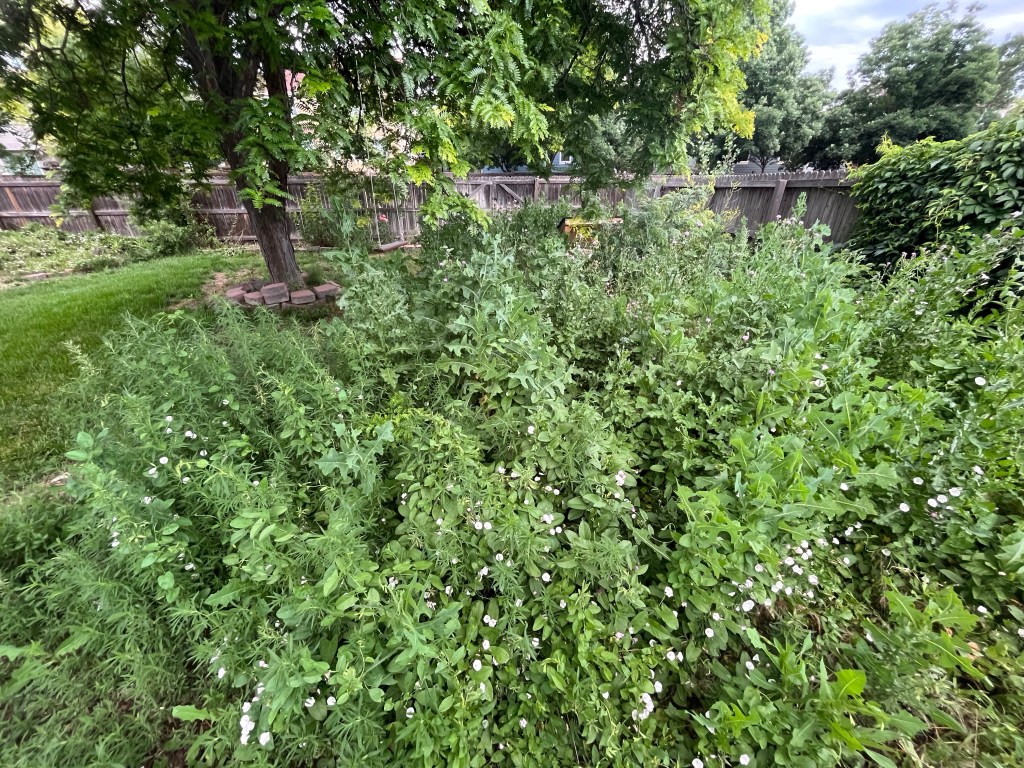
Yes, there has been some extra travel from family circumstances and some volunteer obligations. But what has occupied a large portion of my free time has been taming the jungle that is our backyard.
That’s given me lots of time to mull over the lessons my garden has given me.
Here’s a few of them.
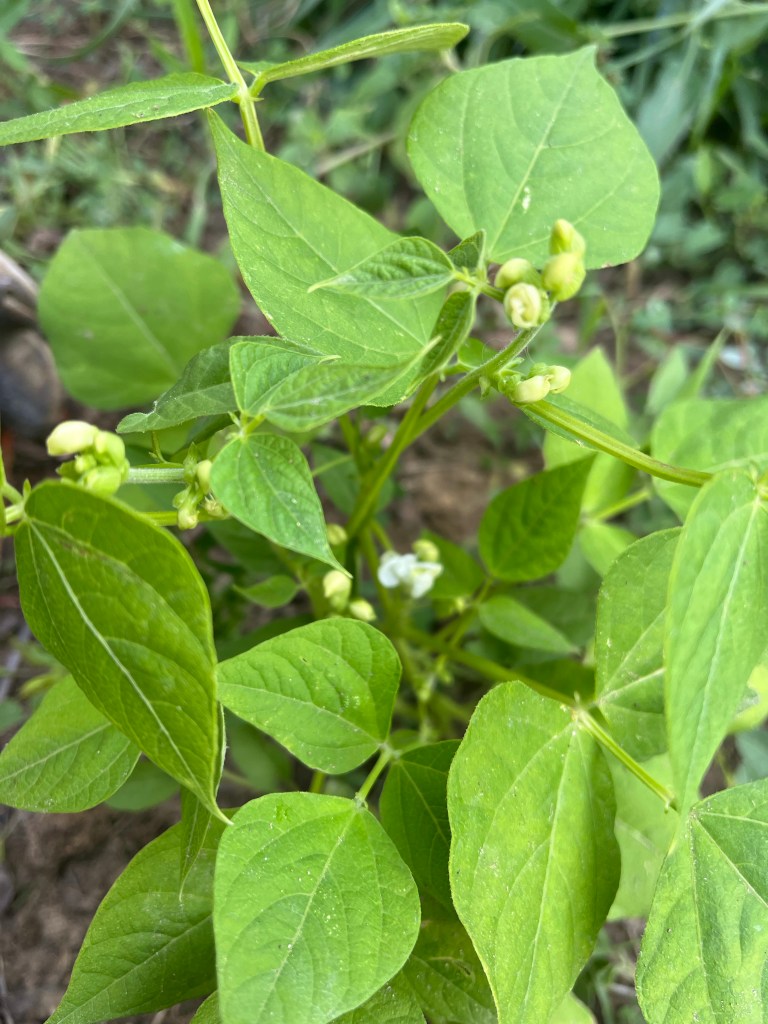
If you expect any fruit(or vegetables), you have to plant some seeds.
I didn’t plant this garden to save money. I dare say the cost of seeds, water, a new sprinkler, and garbage bags for the weeds will make these some expensive veggies. That’s not even counting the cost of my time to tend the garden.
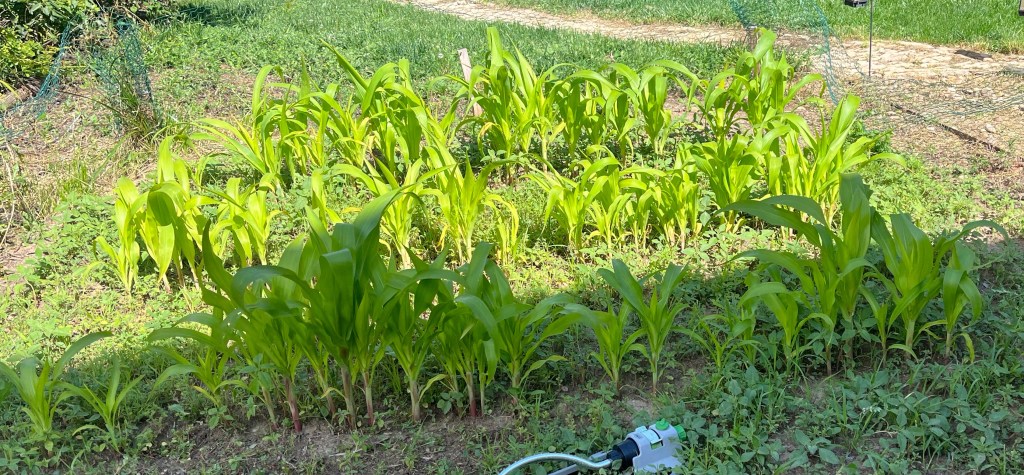
But, have you ever had fresh sweet corn straight off the stalk? Nothing compares – except maybe that crisp snap of just picked green beans, or that tantalizing aroma when you slice a cucumber just in from the garden.
I’m hopeful for these sensations come harvest time.
I’ve also lived long enough to see some of the kids I’ve taught over the years in children’s church and youth groups grow up to be joyful, thoughtful, caring adults. While I can’t claim all the credit for that, I can tell that some of the seeds I planted in their lives years ago have taken hold and borne fruit .
Sowing seeds costs, but it is so very worth it!
Soil prep is important.
The ground in our backyard is mostly clay. Even the shallow roots of grass have a hard time taking hold and staying put.
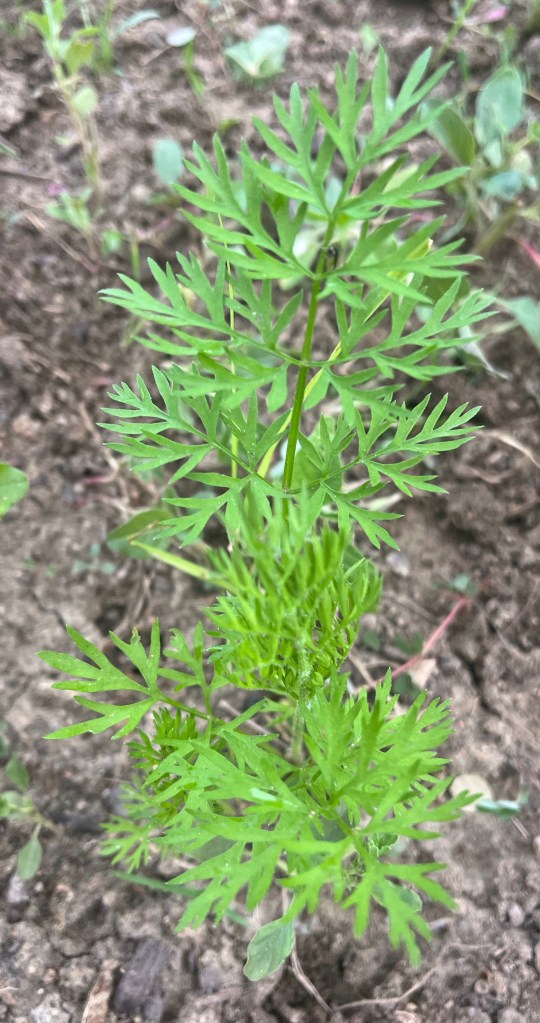
When I first planned a vegetable garden, I knew I had my work cut out for me. I rented a tiller. Then mixed in many bags of top-soil. That gave the veggies the nutrients they need and provided room for roots. How much room remains to be seen when I harvest the carrots.
There’s an old saying for those who want to preach or teach – “They won’t care how much you know until they know how much you care.”
Many people today have a warped view of the Gospel as just an old religion full of rules. Sometimes it takes time and consistent care to bring people to the point where they’ll even listen.
Every person is different and the real work is done by the Holy Spirit.
But God uses those times when you simply listen to people, help them, or just have fun with them.
When they see the reality of the Gospel at work in your life, they’ll be more receptive to it.
I also found that –
Weeds are a pain, but you gotta take care of them.
We’ve had a very wet Spring and Summer this year. When I was out of town for a while in late Spring, I came home to grass over a foot high and weeds taller than me. Our flower beds and xeriscaped area were completely overrun with weeds and the vegetable garden wasn’t far behind. This past two weeks, I’ve been working constantly and am down to spreading the last few bags of mulch. Thankfully, I’ve had some help.
The same is true for our lives.
The sins and distractions that keep us from being fruitful constantly crop up.
We need to accept the help of friends and God to get it clear.
Jesus comes along and does the hard work but we need to be willing to let him.
The work doesn’t end there. The weeds will keep coming back and I’ll keep pulling them, though it will be much easier now that the bulk of them are gone.
Plants need water – water comes from storms.
In Colorado, we usually have to water a lot. We’ve been blessed with a lot of wet weather lately so I’ve saved a ton on our water bill. Unfortunately, I’ve also had to fight to keep our basement dry. Our cars and trash cans bear the scars of hail.
One storm a couple years ago brought so much damage we had to replace our roof.
But we ended up with a much stronger roof.
To grow spiritually, sometimes we have to apply water ourselves with times of study and prayer.
Other times growth is thrust upon us with the storms of life.
Oddly, the single event that brought the most growth in my life was divorce. The emotional pain was horrendous but it opened my eyes to areas where I needed to change and caused me to seek a much closer relationship with God.
I never recommend divorce or any other tragedy, but I strongly recommend that we use those times to grow.
Not everything is a metaphor.
The largest plants in our garden are the corn stalks. Given their size, I’m not as concerned about the small weeds around them.
I thought about that in terms of sin and the predominant ministry in my life – student ministry.
The metaphor doesn’t work.
Even small sins can have serious consequences when you are a leader of young people. It’s critical that I keep a tight lid on even small sins. I need to keep my mind pure so even the smallest sins don’t take root in my life.
If you’re human (and I hope you are), you know that’s not easy. I’m far from perfect and have the same struggles as anyone else.
But one small sin, leading to another could wipe out all the work of ministry I’ve ever done.
My gardening thoughts covered many other topics. Maybe I’ll post some of those at harvest time. Until then, Keep planting seeds, watering, and pulling weeds.
My flight back from North Carolina made a detour. Despite swinging clear down to New Orleans, we still encountered turbulence from the large thunderstorms in our path.
Isn’t that just like life.
I arrived home to a misfiring minivan, a broken toilet, weeds threatening the garden, foot high grass in the backyard (it rained so much there was no time to mow), a leaky basement, a failing shower head, and a wife leaving me (just for the week to help her parents. Calm down.)
We managed to get through the week and got all the repairs taken care of but we are still in an emotional fog as my mother-in-law has taken a turn for the worse. She will likely take possession of her heavenly body this week.
This is the view from the middle of the storm.
Emotional and physical exhaustion threaten to rule.
Other than my daily devotional, I’ve only had one chance to sit down and write. The words wouldn’t come.
Even as the storms rage, I know beyond a shadow of a doubt that there will be sunlight on the other side.
“Even when I walk through the darkest valley, I will not be afraid, for you are close beside me. Your rod and your staff protect and comfort me.”
Psalms 23:4 NLT
My wife and I will rest in God’s strength and guidance as the storm passes.
When we reach the other side, I will update you on my writing journey and the next exciting steps.
Until then, if you are in the middle of life’s storms,
seek the strength and shelter of the one who can calm storms with a word.
When the storm passes, rejoice in the clear new day.
from his family home at the age of 16. He was trapped in the world of human trafficking in a third world country for the next 6 years.
He was bought by a war lord who put him to forced labor.
He had no rights.
He had no respect.
He had no love.
He looked for escape at every opportunity.
As he labored, he turned to faith in God for comfort.
There were no other believers in that area but he remembered enough of his family’s faith to get him started.
When the opportunity to escape finally came, he jumped at it. The attempt nearly killed him.
When he finally made it home, he studied more about Christ, eventually becoming a minister.
Then came the call on his life.
He had a vision in which he received a note from the people of the land of his captivity. It begged him to return.
I don’t know about you, but I would be very hesitant to return to where life was horrible. Nobody wants to revisit bad memories, much less, live among them.
The closer Maewyn got to God, the more he understood God’s compassion and the need the people of that land to get to know God.
Maewyn obeyed the call.
By now he had taken a new name to reflect his changed life.
He returned to that violent land, Ireland, under his new name, Patrick.
He brought the Gospel to a land that desperately needed it and brought about the most drastic revival Northern Europe had ever seen.
Maewyn was just a normal upper middle class teenager in his day. He suffered some extreme trauma that turned his life upside down. No one would have blamed him if he had just found a quiet place to hide the rest of his life.
But he didn’t.
Instead of letting the trauma rule him, he channeled it into compassion and action.
I know that PTSD, social anxiety, and many other conditions are real. I don’t mean to belittle them.
But what would happen if we submitted our fears and trauma to God and let him heal and use them to bring healing to others? I know it’s not easy or simple but Patrick and many others have shown it is possible and the fruits of their actions show it is worth it.
This Friday, as you enjoy your corned beef and cabbage or shamrock shake (or green beer), remember the life of that guy who brought Christ to Ireland and ask yourself if there’s anything you can learn from him. It might just bring you to a life of healing and action.
All too soon, I’ll be entering my last year as a fifty something.
I can hear you –
Wow – you’re old!
Of course, I claim to be 29 with 30 year’s experience.
I must confess – I sometimes feel like I’m in my 50’s.
I just did an all-nighter with our youth group. I had no problem staying awake despite the hours of laser tag, go-cart racing, ga-ga ball and 9-square. But now, a day and a half later, I’m still sore.
Regardless of the aches and waning stamina, this has been the best decade of my life.
So far.
Each decade of my life has had it’s pains and joys, failures and triumphs.
This decade started with marriage. I got to see three of my kids become adults. I began teaching a group of boys whom I will lead at church through their graduation in 2028.
All that is good, but one of the most exciting parts of my fifties is the fact that I started learning how to write at a higher level.
It’s an ongoing process and I admit I am breaking the rules with this rambling blog. Still, it’s been an incredible journey.
I have loved seeing these crazy ideas swimming around my head taking shape on paper.
I do have one regret.
Had I known what joy writing would bring me, I would have started when I was younger.
Don’t get me wrong. I’ve enjoyed my career in technology. It’s just that I now realize what a joy that writing is.
If you are young and have been bitten by the writing bug – pursue it!
If, like me, you’re not so young anymore and have experienced that blazing urge to write – pursue it!
Some of you may have the luxury of pursuing writing in college. That’s awesome.
Most of us will never make a full-time income from writing. For us, there are still many ways to pursue our writing.
I have compiled a short list of resources for the Christian writer which I will upload to the resources page on my website (as soon as I create it).
These are just a few of the resources available to writers to learn and grow and connect to other writers, agents, and publishers.
I created this list for a Christian writers small group that I lead every other Monday evening. Anyone in the Denver area is welcome to join us. We meet every other Monday (including this Monday, Feb. 27, 2023) at 6:30pm at the Café at Barnes and Noble at 120th and Washington in Thornton, CO.
There are similar groups that meet all over the country. They are a great place to start exploring the options available to the new writer.
Make this next decade the best in your life and if the bug has bitten you, make writing part of it!
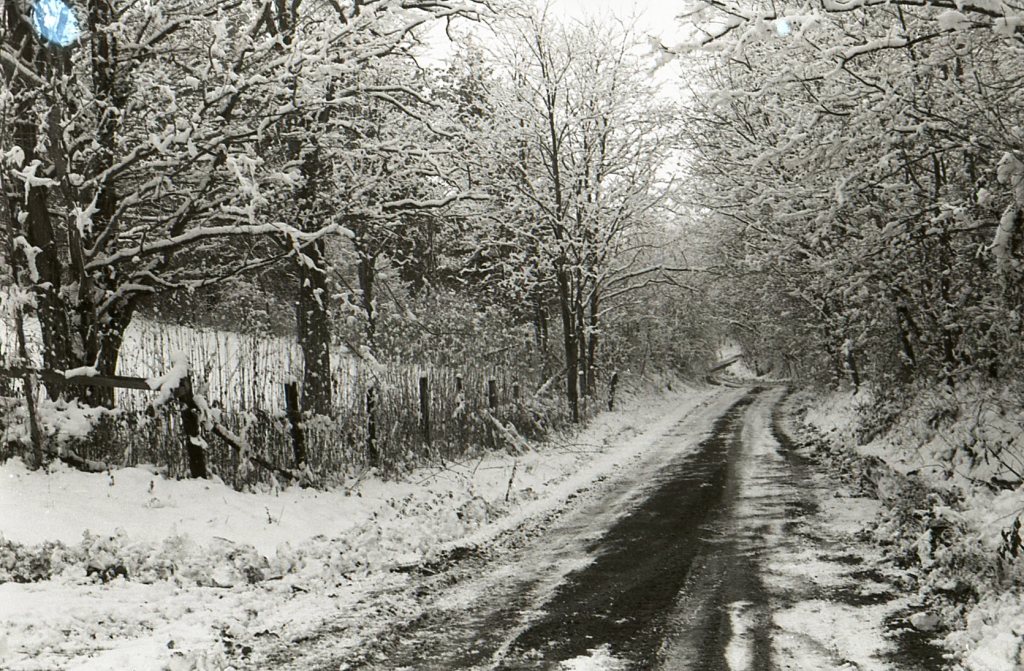
The back window of my 1968 Plymouth Satellite Station Wagon bore testimony to the many times I drove that dirt road as a teenager on the edge of manhood. The view through that dust covered pane may have been obscured but it made my path ahead clearer.
How does a city boy from the San Francisco Peninsula learn from a dirt road?
When I was 16, my parents moved us from Belmont, California to Spring Valley, Virginia. We actually lived on Route 604, another dirt road, but Route 655 was a much longer dirt road that had a deeper role in my coming of age.
The first time I drove down 655, I pulled to the edge to let another car pass.
I misjudged the edge.
My big old wagon with the black California plates was quickly stuck.
I walked to the nearest dwelling with lights on. A small shack of a house that looked like it was held up as much by prayer as by wood offered my only hope.
I stepped onto the porch in my flip-flips, shorts, tank-top, and coat. I was on my way to a Halloween party dressed as a beach bum. I’m not kidding. I really was.
An older man answered the door. He and his twenty something son looked like true hillbillies. They smiled when I explained my costume.
They helped me out of the ditch in no time and refused my offer of payment.
They were some of the nicest people I had met in my young life.
I learned not to judge people by their looks or situation.
I got a job at a farm on that road.
In fact, it was at the farm with the Halloween party – for the people whose car caused me to slide into the ditch. I never told them.
They were business owners from North Carolina who spent a lot of their time away from home. They needed someone to drive their kids and help take care of the farm.
That’s how, one day, I found myself on foot going down the middle of Route 655.
The neighbor’s bull had broken through the fence and I had to prod it back to the neighbor’s farm.
I was scared out of my wits, but I did it.
The bull was more than 10 times my size but it went where I directed and was soon back in the neighbor’s barn.
I learned a little country confidence.
My Plymouth had a similar dashboard to a popular TV car – the General Lee.
The Dukes of Hazzard always drove like their tails were on fire and no one complained but the inept and corrupt police in the show.
I somehow thought that’s how one could drive on dirt roads.
That was dumb.
One day a neighbor flagged me down and tore into me about going too fast. I was caught off guard. I knew I drove fast but had no idea that it upset people.
Yes I was clueless.
I apologized profusely and asked how fast I should take that road (there were no speed limit signs). I think they expected arrogance from me and were taken aback by my attitude.
I learned to try to see things from other’s perspectives.
My old wagon was in bad need of a tune-up the day I crawled it up a hill.
The top of the hill was blind.
The big Plymouth took up two-thirds of the one lane road.
The Ford pickup flying over the top of the hill took up two-thirds.
That math don’t add up!
I was stopped within a second of the sight.
The truck couldn’t stop.
My wide eyes saw the truck veer to my left.
A thick tree stopped it cold right next to me. It leaned steeply over the embankment.
The driver, a young man I vaguely knew, stumbled out and collapsed in pain on the road.
The sight of his passengers shocked me. It was two of the kids from the farm where I worked. The 10-year-old boy had a bloody face. The 13-year-old girl was screaming and holding her wrist.
There were flames under the hood!
They got out with a little help from me.
Thankfully, the flames died out.
I ran to their farm just up the road. As I called the rescue squad, their 16-year-old sister and her boyfriend rushed to the scene.
By the time I got back to the hill, the young couple was about to take the kids to the hospital. They refused to take the driver, a friend of the boyfriend. They were beyond angry.
The driver tried to blame me for the accident. No one but a couple of his friends believed him. I don’t think they believed him long.
I learned the results of unsafe driving.
I could go on about the lessons from that road.
Don’t listen to peer pressure egging you to go faster.
Make sure you have the right size chains before driving backroads in the snow.
Always make sure your spare tire is good.
Don’t fear the dark that far out in the country.
Ditches hide under leaves in the Fall.
Station wagons aren’t made for off-reading!
That last one wasn’t really on Route 655, but you get the point. These were just a few stories that happened on Route 655.
I dare say the two years of country life taught me more about living than the previous 16 in the suburbs!
The next time you’re tempted to complain about a route that takes you over a dirt road, slow down and listen. The road might just teach you something.
It was just beginning to sprinkle as we started up the trail. Thinking the rain would cool off our hike on that hot August day, we happily hiked on,
blissfully ignorant
of what lay ahead.
I was one of thirty some 17-year-olds spending a week at Lynchburg College competing for scholarships. After a busy day of classes, this hike at Sharp Top on the Blue Ridge Parkway was just the diversion we needed.
Our steep mile and a half hike did indeed cool off. The sprinkles turned to rain.
We quickened our pace when we heard distant lightning. Someone said something about a cabin at the top.
The true downpour started as we approached the cabin. We all crammed into the small stone building. No one was brave or foolish enough to go out to the overlook just beyond the cabin.
We were young. We didn’t worry.
Besides, we knew there was a shuttle that would take us back down the mountain. We’d hike the quarter mile to the shuttle stop as soon as the lightning let up.
It didn’t let up.
If anything, it increased.
And the last shuttle of the day would be there soon.
Half of the people in the cabin decided they would stay put where it was safe.
I was not one of those people.
A dozen or so of us rushed out through the deluge.
I couldn’t see a thing. I just followed the person ahead of me. Lightning crashed every couple of seconds all around. I got soaked to the bone.
After a couple of minutes that seemed like a couple of hours, we made it to the bus shelter. I plopped my waterlogged self down on the bench on the far side of the shelter, glad to be safe.
Then it hit me.
Technically, it hit the shelter and the electricity ran through those of us on that far side of the bus shelter.
It was lightning.
Oh, and deafening thunder.
It was literally a pain in the rear. Very painful, in fact.
When it happened, a girl seated on the other side started screaming hysterically. Once she calmed, she explained that she saw us all light up and thought we would die.
The only casualty that I know of was my digital watch, which started flying forward in time. We were sore and soaked and had a new respect for thunderstorms.
As for those stayed in the cabin, the college had to send out another bus. They didn’t return until later in the evening.
Whether we played it safe or braved the storm, we each came home with quite the story to tell.
This story has found it’s way into many children’s and youth lessons. It even into Wil Clarey, The Impossible Summer (as told to Wil by his grandpa). My lessons and my books tend to be filled with stories like these. They tend to grab attention and illustrate a number of points.
Do you have stories?
Let ‘em out!
Write them and share them. If possible, teach with them.
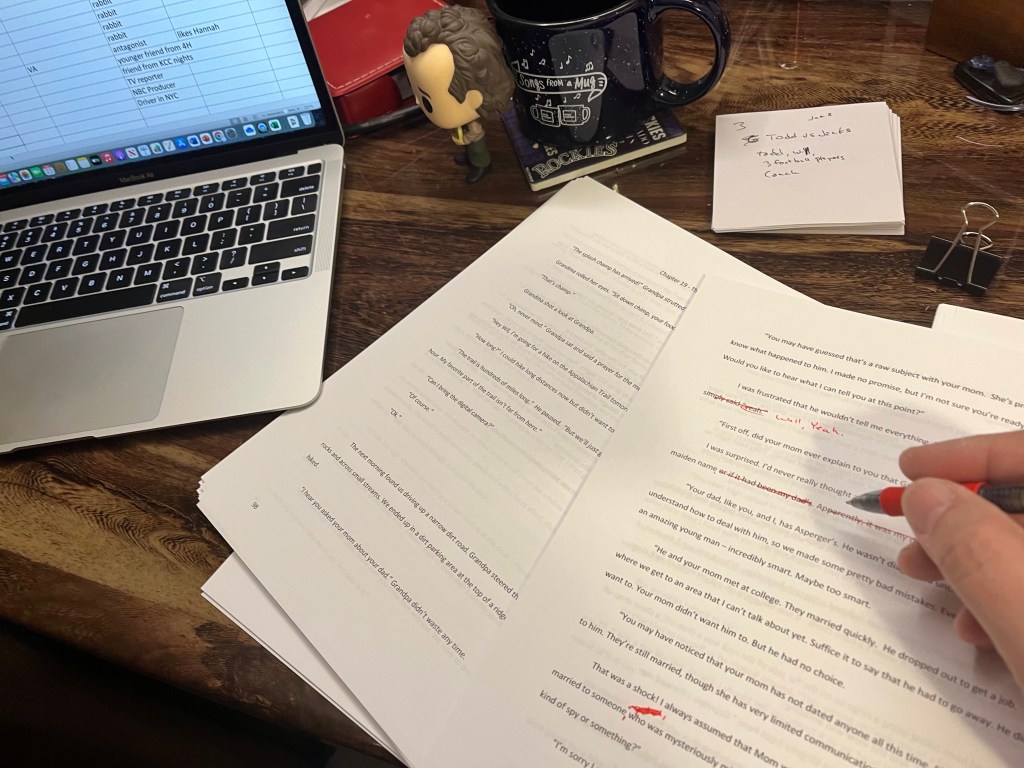
Caution – red pen at work. (Also Spoiler Alert – don’t read manuscript if you don’t want spoilers).
As of a week and a half ago, I have written three books in the Wil Clarey Series. Books two and three are in rough draft form –
very rough.
Book One – The Impossible Summer is in much better shape. It is as thoroughly self-edited as possible. It is completely ready for professional editors.
So I thought.
In preparation for editing book two, School of Hard Knocks, I read through Book one with an eye toward maintaining continuity through the series. I even made a spreadsheet to list all the named characters and details about them (There are 34 named characters in The Impossible Summer at last count).
Of course, I read my paper manuscript with red pen in hand.
The red pen has a mind of its own. It found several poorly worded sentences, a few unneeded lines, and a handful of typos.
So much for “ready for professional edit.”
If you are a casual reader, you might not realize how many times most books are edited before publishing. I used to think that someone would proofread a manuscript and then it would be printed. That’s just the final step.
Here’s a few of the possible edits a manuscript will go through:
Developmental edit – This one can be painful. This type of edit may lead to major restructuring of the story.
Structural Edit – May be included with developmental edit. Looks at the flow of the presentation to make sure the reader can follow along.
Continuity edit (or fact checking) – I just did a bit of that with Book one. For instance, I realized that July 4th needed to fall on a Tuesday to stay consistent with the calendar I chose for books two and three. It can also include checking for consistency in character names and ages, layout of settings, etc.
Copy edit – checks for errors in grammar and spelling.
Proofread – checks for typos.
Some edits may be combined or split to suit the publisher and the book. I’ve seen about as many interpretations of editing as I’ve seen articles on the process.
The bottom line is, a good book is the work of the author and several others.
Just like a lawyer representing himself has a fool for a client, the author who self-edits beyond the first couple of edits has a fool for an editor.
As I don’t have the cash to lay out for a series of professional edits, I am praying for a traditional publisher. In the meantime, realize that any excerpts you may see here or at WilClarey.com may not be as they get published.
I promise you that I will not publish whole books without completing the editing process. I’m not that cruel.
Okay, maybe I’m a little cruel.
These blogs and my Christmas stories are self edited.
Bob Wiley (bobble head) is excited to see the end of the book.
One day last week, I was typing along, trying to wrap up the rough draft of Wil Clarey: The Mystery at the Mill, when I got to the end of a paragraph and tears threatened to spill from my eyes.
No, it wasn’t some emotional scene.
It just hit me, as the last few words hit the page, that it was the end of the book.
With my busy schedule, it has taken me over a year and a half to write it.
It was a momentous occasion!
I was brought up to stuff emotions inside.
“If you don’t stop crying, I’ll give you something to cry about”
was heard around my childhood home more than once.
Later in life, even my father realized how destructive that phrase was.
Now I’m a big softy.
My kids like watching emotional movies with me so they can see me cry. Of course, I use the “I’m just stuffed up” excuse every time but they know better.
The same thing happens to me at a powerful worship service – especially if we sing songs that hold nostalgic significance to me.
Brant Hansen writes about having experienced emotional envy. (Blessed are the Misfits c. 2017, Brant Hansen). Being on the autism spectrum, situations that would be emotional to others didn’t faze him. He makes the point that those experiences and the faith that goes with them are not dependent on emotion.
When I lived in Arizona, I attended a church where the worship leader got so emotional every week that it distracted me from the worship experience. After a couple of months there, I ended up going to a different church because of it.
Worship can be an emotional experience.
So, what am I trying to say?
Is emotion good or not?
Anyone who has experienced tears of joy should be able to tell you that emotion is good. I agree. But,
Emotion should never take the place of faith.
Faith will produce an emotional response in most people. But faith based on emotional experiences has an unstable foundation.
In preparing for this blog, I tried to think of experiences I’ve had that were emotional. There were many. But it wasn’t the emotional response, but the situation and the faith involved in it that were life changing.
I could go on and on about emotions. There are so many negative emotions that can make people feel trapped.
I’ve been there.
I can offer no easy escape, but I can say that positive emotions help.
So, next time that song has you in tears, that unexpected blessing brings tears of joy, or that leap of faith brings release from anxiety, savor the emotional experience without basing your life on it.
You may just find those flashes of joy help light the way to an emotionally and spiritually healthy life based on